
27 October 2026


A picture-perfect lawn is not enough if guests are left chilly, crowded or unsure where to go. Choosing a garden marquee wedding venue means looking beyond the setting: assess the facilities, weather arrangements, access, catering and alcohol licensing before you decide. These practical details help a countryside celebration feel comfortable from arrival to the last dance.
It is natural to be drawn first to the views, the garden and the prospect of celebrating outdoors. Weigh those details alongside the essentials: what the venue provides, what needs planning and which questions will shape your decision. Consider guest facilities, weather readiness, access, food and drink, and licensing to picture how the day will work as well as how it will look.
Start with your guest list and compare it with the usable space for the ceremony and reception. A clear capacity plan helps you judge whether the layout will feel comfortable throughout the day.
Ask for separate capacities for ceremonies, seated meals and evening receptions, as each layout uses space differently. A ceremony may need clear aisles, while dining requires room for tables and guest movement. In London, small marquee venues typically accommodate up to 100 seated guests, while large venues are defined as holding over 300. Higher Holcombe in Devon lists capacity for 80 guests.
Compare examples with your own guest numbers rather than treating them as a guide to every venue. Ask how capacity changes when you add a dance floor, stage or extra seating. Restaurant capacity also depends on the dining layout, so check whether the room can host both the meal and later celebrations.
A garden marquee wedding venue can centre your celebration on an outdoor setting, with the marquee arranged around your ceremony and reception plans. A traditional venue usually places more of the event in its existing rooms. Neither format is automatically a better fit: compare how each accommodates your guest list, chosen layout and movement between spaces.
Picture the day in sequence, from arrival and ceremony to the meal and evening reception. Note where guests will gather and sit, and whether changing rooms interrupts the flow. Compare the stated capacity for each part of the day, not just the largest headline figure. This makes the differences between a garden layout and a fixed room clearer.
Hire packages vary, so do not assume that “marquee hire” includes every part of the event. Read the written breakdown for the space, furniture, lighting, catering arrangements, setup and clearing. Establish which items are included and which need separate arrangements.
Separate venue hire from optional services, and note who is responsible for arranging each item. If furniture or catering is handled separately, for instance, that affects your planning and the layout you can choose. Record what is included, what costs extra and what remains your responsibility before comparing proposals. A clear list makes the scope of each offer easier to understand.
Booking steps, deposits and cancellation terms vary between venues, so do not assume a standard amount. Begin by discussing the date, guest numbers and ceremony or reception layout, then read the written offer before committing. Check payment dates, what the deposit covers, and how cancellation or a change of date is handled.
Keep the agreement and payment records together, and make sure every agreed detail appears in writing. If your plans include a seated meal followed by an evening reception, confirm that both are covered. Clear terms help you compare venues fairly and understand the financial effect of changing your plans.
A beautiful countryside setting can feel magical, but guest comfort depends on more than the view. Assess the marquee’s facilities, temperature arrangements and wet-weather plan together, considering how each will work during the ceremony, meal and evening reception.
Guests can move under cover if the planned layout keeps the ceremony and reception within suitable sheltered space. Ask how the venue handles wet ground, wind-driven rain and changing conditions, and identify an indoor or covered alternative before finalising the running order. A clear plan helps prevent last-minute decisions from disrupting the day.
Walk through the marquee as a guest would. Identify the entrance, seating, dining area, toilets and routes to other facilities. Check whether people can move between these points without crossing a serving area or stepping onto exposed ground. A drinks station beside the entrance, for example, may create a bottleneck when guests arrive together.
Discuss climate control rather than assuming a marquee will stay comfortable. Ask what heating or ventilation arrangements are available, who operates them and how they can be adjusted as conditions change. A sunny afternoon can make a crowded space feel warm, while a cool evening may leave guests reaching for coats. Consider where equipment will sit and whether it affects seating or movement.
Facilities shape the celebration as much as the canvas. Ask what furniture, lighting, power access and flooring are included, and list separately anything you must arrange. A band, caterer and photographer may each need practical access, so plan where equipment will go without obstructing guests. Confirm setup and clearing responsibilities in writing.
Take the schedule beyond the marquee and trace each transition. Picture guests arriving in damp coats, gathering for photographs and then sitting down for dinner. This walk-through can reveal where extra shelter, clearer signs or a revised layout would help. Include your suppliers so their arrangements support a comfortable, well-paced day.
A striking backdrop matters, but guests also need a straightforward route from arrival to their seats. For a garden marquee wedding, assess the full journey, including outdoor paths, entrances, toilets and the route between ceremony and reception. A canvas entrance can look welcoming, but its threshold, ground and opening width all affect how easily guests can pass.
Walk the proposed route rather than relying on a site plan. Start at the arrival point, follow the path to the marquee, then trace the route to seating and toilets. Look for uneven ground, loose gravel, slopes, narrow gates and surfaces that could become slippery after rain. A lakeside setting or lawn may create a beautiful backdrop, but the approach still needs to work for guests using mobility aids.
Plan the layout around individual needs. Place seats for guests who need to rest near the ceremony entrance, and keep a clear route to the nearest facilities. Check whether wheelchair users can reach their chosen seats without moving tables or crossing busy serving areas. A long walk between the ceremony and reception may affect a guest with limited stamina, even if each space is accessible separately.
Share specific requirements with the venue before finalising the floor plan. Explain, for example, if a guest uses a wheelchair, needs a level route or cannot manage steps. Then discuss practical adjustments, such as changing the table arrangement or placing their seat closer to an entrance. Agree who will make those arrangements and how the route will be kept clear during service.
Consider comfort throughout the schedule, not only during the ceremony. A long wait standing for photographs can be tiring, while a crowded entrance may make arrival harder for someone with limited mobility. Build in seated pauses, keep essential routes clear and make the plan known to those guiding guests. A walk-through with the venue can turn accessibility needs into specific, manageable arrangements.
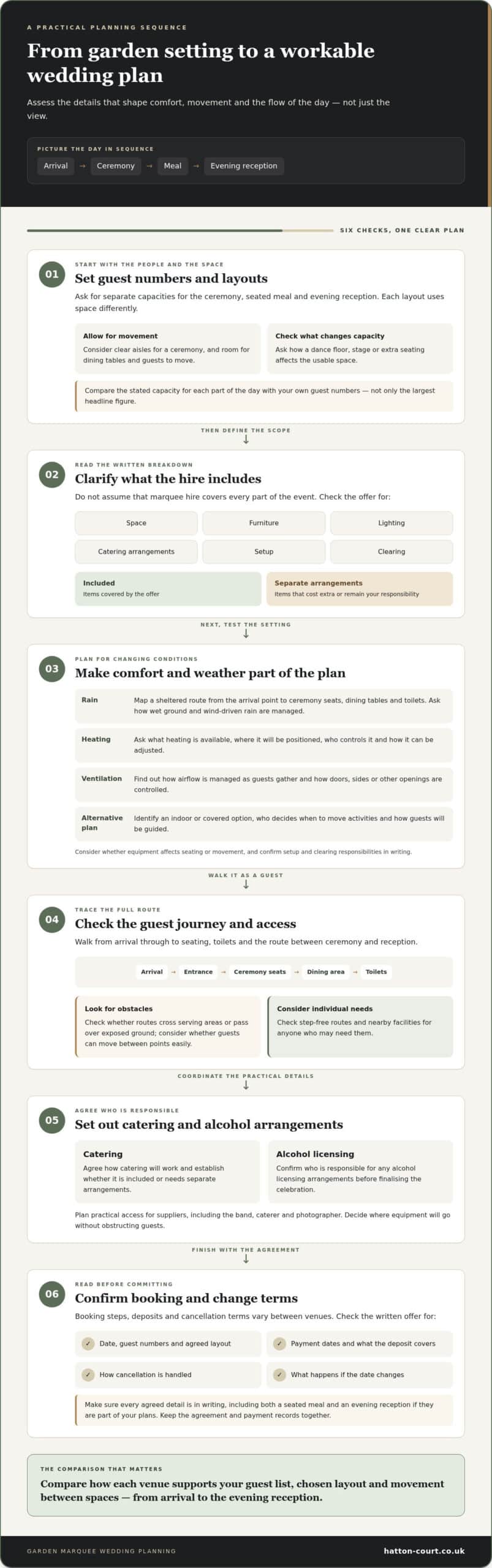
Food and drink shape the rhythm of a wedding, from a relaxed daytime meal to an evening reception. Before choosing a caterer, establish how service will work inside the marquee, who supplies equipment and how the menu suits your plans. A romantic countryside setting can frame an unforgettable meal, but clear responsibilities make the arrangements workable.
Ask whether catering is provided by the venue or arranged through external suppliers. Clarify what the caterer needs on site, such as access to preparation areas, power or a suitable serving point. These requirements affect where tables, entrances and guest routes can go. A buffet, for example, needs a different layout from a seated meal with table service.
Discuss the menu in practical detail. Share dietary requirements, preferred service style and the schedule for each course. Confirm how the caterer will receive final guest information and handle changes. If you plan a drinks reception before dinner, agree where refreshments will be served and how guests will move on to the meal. Record the agreed menu and arrangements in writing.
Discuss alcohol separately. Ask the venue to explain the event’s licensing arrangements, including who is responsible for serving alcohol and what service is permitted in the marquee. Do not assume a bar, drinks package or permission to bring your own alcohol is included. Set out your plans, such as wine with dinner or an evening bar, and request written confirmation.
Clarify who coordinates drinks service if the caterer and venue are separate suppliers. Confirm what happens if your plans change, such as extending the reception or altering the service style. The venue’s written terms should make responsibilities clear, including any restrictions that affect the schedule. This is especially useful on a larger estate, where the marquee, catering area and drinks service may occupy separate spaces.
Before committing, compare the food and drink arrangements with your running order. Check that the meal, speeches and evening service fit the setup, then share the agreed plan with each supplier. A written schedule helps everyone understand where they need to be and what they are providing, leaving you free to enjoy the celebration rather than resolve last-minute confusion.
The cost of a garden marquee wedding venue in the UK depends on the setting, date, guest numbers and what the hire covers. Compare written quotes by separating venue hire from catering, furniture and other arrangements, so each figure reflects the same plans.
Garden venues range from established gardens and country estates to outdoor spaces beside a hotel or historic property. Each setting brings different surroundings and practical considerations, so look beyond photographs. For example, Tremenheere Sculpture Gardens can recommend known and trusted suppliers, including marquee hire companies and caterers.
Consider how the garden will support your celebration: where the marquee could sit, how guests will reach it and what views frame the ceremony. The layout should suit the site as well as your plans, rather than treating every lawn as interchangeable. Check that the space can support the event flow you have in mind.
There is no single UK hire price that applies to every garden venue. The total depends on factors such as location, date, guest numbers, hire period and included services. Ask for an itemised quote, then compare like with like rather than focusing on one headline figure.
Separate the venue charge from costs for the marquee, furniture, catering and staffing. Check whether the quote covers setup and clearing, and whether any supplier arrangements sit outside it. A venue hire figure, for example, may cover access to a garden without the equipment needed to host the reception.
Before choosing a setting, make a simple comparison for each option: site, layout, included hire elements and external suppliers. Consider how it works in less favourable weather and whether guests can move comfortably between spaces. A garden may look peaceful on a clear day, but its layout and arrangements still need to work throughout the celebration.
Ask each venue for a written breakdown and note any differences in what is included. Confirm that the proposed space suits your ceremony and reception plans, and that supplier arrangements fit the site. For a considered next step, explore wedding celebrations in a setting that feels right for your plans.
Hatton Court Hotel offers a warm next step if you’re considering a country-house wedding celebration or a restful stay around the occasion. At Hatton Court Hotel, Upton St Leonards, near Gloucester, Gloucestershire, Cotswolds, guests can enjoy panoramic views across the Severn Vale, with Cosy Rooms, Comfy Rooms and Country Rooms available for accommodation.
Weddings at Hatton Court Hotel may suit couples considering a celebration in a countryside setting. For a quieter visit, Afternoon Tea offers another way to enjoy the hotel’s relaxed surroundings. These options differ from hiring a garden marquee, so consider which setting best reflects your plans and the experience you would like to share with guests.
Contact Hatton Court Hotel to discuss your plans or visit hatton-court.co.uk.
As you settle on a garden marquee wedding venue, picture the day from each guest’s perspective, from arrival and finding a seat to the final moments of the celebration. This helps you focus on the details that matter while leaving room for the setting and personal touches to feel like yours.
If accommodation is part of your plans, Hatton Court Hotel offers Cosy Rooms, Comfy Rooms and Country Rooms. These may suit guests looking for a place to stay as part of a wider celebration. Choose based on the experience you want to create and how guests will spend their time around the wedding.
For a gentle next step, explore the hotel’s wedding information and consider whether it fits your plans. Contact Hatton Court Hotel to talk through your ideas, and take the next step at a pace that feels right.
A garden marquee’s capacity depends on its usable layout, not just its footprint. Ask for a plan based on your guest list, including seating, aisles, service areas and entertainment. A space may feel generous when empty but become crowded once tables and equipment are in place. Review a floor plan for your intended arrangement before settling your numbers, and consider whether guests will have room to move comfortably.
Requirements depend on the site and planned activities, so there is no single checklist for every wedding. Set out your plans for the ceremony, music, food and alcohol, then ask which permissions apply and who is responsible for arranging them. Have responsibilities and any limits recorded in writing. This helps identify practical constraints early rather than relying on another venue’s arrangements.
The right venue suits your location, guest needs and plans for the day. Shortlist garden settings within a comfortable journey for your guests, then compare them in person. Look at the approach to the marquee, the views from the ceremony area and how the site supports your schedule. A visit can reveal details photographs do not show, such as how the spaces connect.
Facilities vary between marquee weddings, so match them to your event plan. Check practical essentials such as toilets, lighting, power access and suitable food-service arrangements. Consider how guests will find each area, especially after daylight fades. Ask for a site plan showing these facilities in relation to the marquee, and note anything you need to arrange separately.
Noise limits, catering arrangements and alcohol permissions can vary by venue and location. Ask for the music finish time and any conditions on amplified sound, then check they fit your evening plans. Confirm who provides food and drink, who serves alcohol and what the venue permits. Keep the answers with your booking documents so your caterer and other suppliers can plan around the same arrangements.
Check the date, guest layout, access, weather arrangements and written terms before deciding. Walk the route guests will take and view the proposed marquee in its event layout, not just as an empty garden. Compare each venue against the same list of details. Before booking, ensure the agreement reflects the arrangements discussed and the responsibilities each party has accepted.
















Leave a Comment: