
29 October 2026


A later wedding celebration usually begins after 5pm and moves from the ceremony into the evening reception, often without a formal wedding breakfast. This can create a simpler celebration, with drinks and canapés or one meal. Costs depend on the venue, guest numbers and choices, so what’s included matters as much as the headline price.
A later start changes more than the length of your wedding day: it affects the pace, food plans and atmosphere. This guide explains what twilight wedding packages may include, how costs are shaped and how an evening celebration compares with a daytime wedding, so you can picture the gathering that feels right for you.
Twilight wedding packages usually bring together a ceremony setting and evening reception arrangements. Inclusions vary, so compare the spaces, food, drinks and additional touches rather than relying on the package name alone.
A sunset backdrop uses the evening light and surroundings to frame ceremony photographs. Timing matters because natural light changes as the celebration unfolds.
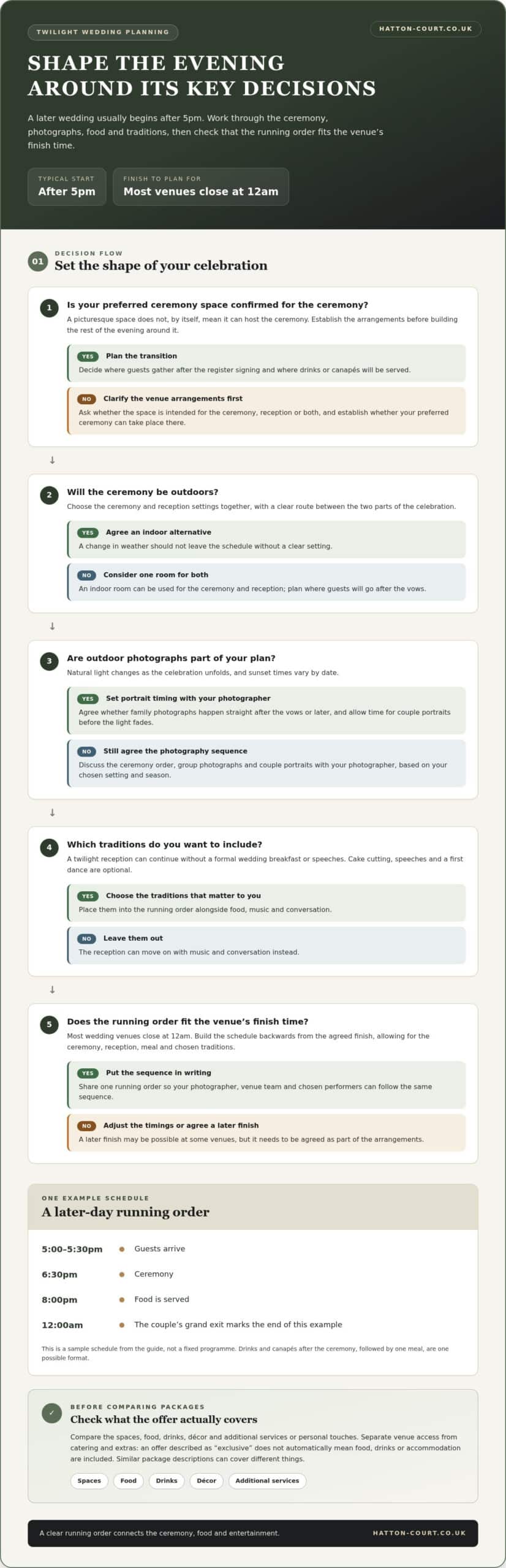
Discuss the ceremony order, group photographs and couple portraits with your photographer. For example, agree whether family pictures will happen straight after the vows or later in the reception. That choice affects how much time remains for portraits before the light fades. Sunset times vary by date, so plan around your chosen setting and season rather than assuming a fixed golden-hour slot.
Consider how the backdrop will look in wide group shots and close portraits. A garden, tree-lined view or historic building each creates a distinct look. For an outdoor ceremony, agree on an indoor alternative too, so a change in weather doesn’t leave the schedule without a clear setting.
A venue’s appearance and its ceremony arrangements are separate considerations. A picturesque space alone doesn’t mean it can host the ceremony.
Ask whether the space is intended for the ceremony, reception or both, and discuss the arrangements with the venue. Establish that your preferred ceremony can take place there before building the rest of the evening around it. Holding the ceremony and reception in one place can also save guests travelling between venues.
Compare the ceremony space, reception room and route between them. For example, decide where guests will gather after the register signing and where drinks or canapés will be served. These practical details shape the flow as much as the room’s appearance.
The ceremony and reception can flow together, with indoor or outdoor settings chosen to suit the venue. A clear transition helps guests know where to go as the evening moves from vows to celebration.
You could hold the ceremony outdoors and move inside afterwards, or use an indoor room for both. Hosting both parts at one venue means guests needn’t travel elsewhere. Plan where everyone will go after the register signing and whether drinks and canapés will be served during the changeover.
The reception can follow without a formal sit-down meal or speeches. Cake cutting, speeches and a first dance are optional traditions. Reusing ceremony styling in the reception space can create a connected look without having to move every detail separately.
A sample schedule sets out arrival, ceremony and food times, helping you shape a well-paced evening. Drinks and canapés after the ceremony, followed by one meal, can suit a shorter celebration. Music, conversation and chosen traditions can then carry the reception.
One sample has guests arriving between 5:00 and 5:30pm, with the ceremony at 6:30pm and food served at 8:00pm. The couple’s grand exit at 12:00am marks the end of that example schedule. Most wedding venues close at 12am, so set the finish time before arranging the evening’s entertainment.
Use a written running order to align the ceremony, food and entertainment. Your photographer, venue team and chosen performers can follow the same sequence, while guests benefit from a smooth transition between each part of the celebration.
A twilight wedding package brings together venue arrangements and reception elements for a later celebration. The exact mix varies, so compare what each offer covers before weighing its overall value.
Packages may combine a ceremony setting, reception space, food, drinks, décor and additional services or personal touches. This matters because offers with similar descriptions can cover quite different parts of the evening.
Start with the essentials: which spaces are included, what food is provided and whether drinks are part of the package. A reception might include canapés after the ceremony and one meal later, rather than a wedding breakfast. Treat these as possible formats, not a fixed menu or a promise that every package includes each option.
Then look at the details that shape the setting. Décor can contribute to the room’s atmosphere, while personal touches make the celebration feel individual. Check whether listed styling refers to particular items or a broader allowance. A beautifully arranged room doesn’t necessarily mean every decoration is included.
Separate venue access from catering and extras. If an offer says “exclusive”, establish what that describes; don’t assume it includes food, drinks or accommodation. Costs can depend on the venue, location, guest count, day of the week and inclusions. Comparing items individually makes the differences clearer.
Consider how each element fits together. Drinks followed by a meal create a different reception rhythm from canapés and dancing. Guest numbers affect how much food is needed and which package elements matter most. Focus on what you’ll use rather than choosing by title alone.
A typical twilight wedding begins after 5pm, with the ceremony and reception arranged for the evening. The start time shapes guest arrival, vows, photographs and food.
Most wedding venues close at 12am, making the finish time a central planning detail. Build the schedule backwards from then, allowing space for the ceremony, reception, meal and traditions you’d like to include. A later finish may be possible at some venues, but needs to be agreed as part of the arrangements.
Look at the whole schedule, not just the ceremony time. If guests arrive shortly before the vows, make the transition to drinks and food clear. A written running order can show when each part begins and who will guide the evening.
For a country setting, consider the ceremony space and reception arrangements together. Wedding venue details can help you explore a setting for an evening celebration.
A twilight wedding is held in the late afternoon or early evening, around dusk. This timing gives the day a different shape from a daytime event. Rather than beginning with hours of earlier activities, couples gather guests for a ceremony and evening celebration. The exact feel depends on the season, venue and chosen schedule.
“Twilight” describes the time of day, not a fixed programme. One couple might plan an afternoon ceremony followed by an unhurried reception; another might prefer a later start and livelier evening. The key distinction is that the ceremony and celebrations take place as daylight fades, rather than as part of a full daytime wedding.
That timing can create an intimate atmosphere, but it doesn’t dictate guest numbers or the style of the occasion. You might choose a small gathering or a larger celebration, then shape the reception around the people attending. Consider how guests will experience the transition from arrival to settling into the evening.
A formal wedding breakfast isn’t what defines this format. The focus is the late-day ceremony and what follows, leaving you free to decide how traditional or relaxed the reception should feel. You might keep familiar elements such as speeches or a first dance, or choose a simpler flow centred on conversation and entertainment.
Lighting is both part of the appeal and a practical planning consideration. An outdoor setting changes as the afternoon moves towards dusk, while an indoor room may need a different lighting plan for the ceremony and reception. Consider how photographs, guest comfort and your preferred atmosphere will work across both parts of the celebration.
This format may suit couples who want their wedding to begin later and centre on the evening. It can also work for those who prefer selected traditions over a full-day programme. Start by deciding what matters most, such as the ceremony setting, reception mood or time with guests, then build the schedule around those priorities.
A twilight wedding can make the day shorter, changing how couples plan their spending. Compared with a traditional wedding, a shorter celebration may mean fewer scheduled elements, such as an early ceremony and formal wedding breakfast. That doesn’t automatically mean a lower total cost: the venue, guest numbers, catering and personal choices still shape the budget.
The main difference is the shape of the day. A full-day celebration may include several stages before the evening reception, while a twilight format centres on later celebrations. Compare the elements you’d genuinely use rather than assuming a shorter event removes every major cost. Consider venue hire, food, drinks, décor and extra services separately.
There are practical advantages and trade-offs. Fewer hours can make the event feel focused and intimate, and skipping a formal wedding breakfast may reduce the catering required. However, guests arrive later, so the evening needs to fit the ceremony, food and entertainment into a shorter window. Weigh that concentrated pace against the relaxed, extended feel of a full-day gathering.
Start with a like-for-like comparison. Write down the venue charge, meal format, drinks, décor and personalised touches for each option. Then note what changes when the ceremony begins later. Replacing a wedding breakfast and evening meal with one meal changes the catering plan, but the overall effect depends on the food chosen and guest count.
Guest numbers are a key budget factor in either format. A small gathering with close friends may need different catering and room arrangements from a larger reception. When booking, separate fixed venue costs from items that vary with attendance. This makes it easier to see whether a shorter schedule changes your spending or simply moves costs into the evening.
Consider the atmosphere as well as the figures. A romantic ceremony in fading daylight can create a striking setting, while indoor lighting and evening entertainment help carry the celebration after dusk. Choose the traditions that matter, such as speeches or a first dance, rather than treating a full programme as essential. Reusing ceremony styling at the reception can also avoid duplicate décor.
There’s no single saving that applies to every wedding. Package costs vary with the venue, guest numbers and preferences, including décor, catering and additional services. Compare the total for the celebration you want, not just the length of the booking. That keeps the choice grounded in your priorities, whether you favour a lively evening or a traditional full-day wedding.
The cost of a twilight wedding varies with the venue, guest numbers and your preferences. Packages can also differ by location, day of the week and inclusions, so a headline figure alone won’t show the full value. Compare what’s covered with the celebration you want, from room hire to catering and personal touches.
Start by separating the venue charge from everything else. Check whether the quoted figure covers the setting only or also includes catering, drinks, décor or additional services. Don’t assume an exclusive-use rate includes food, drinks or accommodation. Treat each as a separate line unless the package terms clearly include it.
Guest numbers affect the comparison because catering and drinks depend on attendance. A smaller reception with canapés and one meal has different requirements from a larger gathering with a buffet. Food choices matter too: compare the actual format and inclusions rather than assuming every twilight wedding package offers the same menu.
The day of the week and venue location can also affect package prices. Compare like with like: use the same guest count, ceremony and reception spaces, catering format and included services. If one package includes décor and another doesn’t, account for that difference before judging value. A lower starting figure may cover fewer elements.
Make a simple comparison table before choosing. List each venue package down one side, then note the venue charge, food, drinks, décor and additional services across the top. Mark items as included, separately priced or not part of the package. This gives you a clearer picture of the likely total and helps distinguish a venue-only charge from the full event cost.
Keep personal touches in view, but decide which matter most. A sunset setting, tailored décor or extra reception detail may shape the atmosphere, yet each can affect the overall spend. Reusing ceremony styling at the reception is one practical way to avoid duplicate décor. Prioritise what guests will experience, such as the food, drinks and flow of the evening.
There’s no single typical price that applies across UK venues. Wedding packages vary according to their inclusions and the factors above, so the useful takeaway is to compare the complete cost for your chosen format, not a starting rate alone. For a country-house setting, explore wedding arrangements and consider which details belong in your evening celebration.
Hatton Court Hotel offers Weddings at Hatton Court Hotel for couples considering a country-house celebration. Set at Hatton Court Hotel, Upton St Leonards, near Gloucester, Gloucestershire, Cotswolds, it provides a scenic setting for wedding plans.
After an evening celebration, Cosy Rooms, Comfy Rooms and Country Rooms offer comfortable accommodation options. Afternoon Tea is another way to enjoy a leisurely visit, whether you’re marking a special occasion or spending time together.
If you’re considering a twilight celebration, explore the hotel’s wedding offering and how its rooms could fit your plans. Contact Hatton Court Hotel for the latest package details.
To talk through your plans, contact Hatton Court Hotel.
Before choosing a venue, picture the moment you want guests to remember: a quiet exchange of vows, a warm welcome at dusk or a lively evening together. That image can guide decisions about the setting, pace and personal details you want to include.
For a twilight wedding, Hatton Court Hotel offers Weddings at Hatton Court Hotel, with Cosy Rooms, Comfy Rooms and Country Rooms for guests considering a stay. Wedding arrangements and prices can change, so contact the hotel for the latest details.
Contact Hatton Court Hotel to start a conversation about your plans, and take the next step at a pace that feels right for you.
Yes, speeches and a first dance can both be part of the celebration. Choose the traditions that suit your evening rather than following a fixed programme. For example, you could schedule speeches before the meal, then save the first dance for after guests have eaten. If you’d rather keep things informal, leave these moments out and give guests more time to mingle.
Catering depends on the package chosen. Some celebrations serve drinks and canapés after the ceremony, followed by one meal, while others use a different reception format. Before comparing options, find out which food and drinks are included and which are separate choices. A buffet and a served meal create different guest experiences, so match the catering style to your plans.
Guests can expect a later ceremony followed by an evening reception, rather than a full day of wedding activities. Make the arrival time and venue clear on the invitation, so guests know when to come and where to go after the ceremony. Depending on your plans, the evening may include a meal, drinks, music, speeches or dancing in a more focused schedule.
A twilight wedding is held in the late afternoon or early evening, around dusk. Rather than starting with a morning ceremony and continuing through a full day, the celebration centres on the vows and evening reception. Shape the event around your preferred setting and traditions, making it formal or relaxed without following a set template.
These ceremonies usually begin after 5pm, placing the vows in the late afternoon or early evening. The exact time depends on the couple’s schedule and the season, particularly if they want photographs in natural light. A sample timeline might have guests arrive between 5:00 and 5:30pm, with the ceremony later. The invitation should give guests a clear arrival time.
Inclusions vary by venue and package. To assess an offer, separate venue arrangements from catering, drinks, décor and additional services. Check whether the package covers the ceremony space as well as the reception, and whether items such as table settings or personal touches are included. This makes like-for-like comparisons easier.
There’s no single cost that applies across UK venues. The total depends on the venue, guest numbers, day of the week and your choices. Catering, décor and additional services can also affect the amount. Compare the full cost of the celebration you’re planning, rather than judging by a starting rate alone, and distinguish venue-only charges from separately priced items.
Begin by placing the ceremony in the schedule, then arrange guest arrival, photographs, food and evening entertainment around it. Decide which traditions you want, such as speeches or cake cutting, and give each a place in the running order. Consider how guests will move between spaces and when the meal will be served. Share a written schedule with the venue and suppliers so everyone can follow the same plan.

















Leave a Comment: