
26 October 2026


A wedding budget gives you a clear spending limit before the details begin to gather pace. The average UK wedding cost used for the 2026 breakdown is £20,604, but your own total depends on the celebration you want and what you can comfortably save. Learning how to budget for a wedding means setting that personal limit, then sharing it across your priorities rather than treating the average as a target.
It’s natural to picture the setting, the meal and the people around the table before considering every cost. A budget brings those ideas together, helps you see what matters most and makes it easier to adjust when one part of the day starts taking more than its share.
This guide will walk you through building a practical budget, turning it into a savings plan and understanding typical UK costs by category. You’ll also find a sample breakdown and simple ways to save on food, drink, flowers and decorations, so your plans can feel considered, comfortable and truly your own.
Ask each supplier about its deposit, payment stages and final balance date, as schedules vary by contract. Venue and catering are often major costs, while guest numbers, transport and styling can give you room to adjust.
Prioritise venue, catering and guest-related spending, then protect the details that make the day feel special. Compare, for example, a shorter photography booking or playlist with a full-day package or hired entertainment.
Read each agreement line by line and record deposits, staged payments, final balances and cancellation terms. Questions to ask a wedding venue about costs can help you clarify what’s included and check for additional charges. Wedding venue service charges typically reach 20%-25% of the event’s total food-and-drink fee, so include them in catering calculations. Keep a contingency for unexpected costs, and list any gratuities separately rather than assuming they’re included.
Compare the combined cost of your ceremony location, reception setting and travel, not just the venue’s headline figure. Legal fees vary with location and ceremony arrangements, while transport costs depend on distances and guests’ needs. Add stationery, postage and journeys to your spreadsheet; holding the ceremony and reception nearby can reduce travel and coordination costs.
Use your budget to set clear spending limits around your priorities, then give each decision a place in the plan.
Turn your guest list and preferred date into a savings target, then track your progress against a simple schedule.
Draft your guest list before deciding how much you can afford to save. Use the likely guest range to assess whether your plans fit your finances, then estimate a smaller gathering’s catering, transport and invitation needs before setting your target.
Group invitees by how closely you know them, then agree where to draw the line. Check whether children, evening guests or plus-ones affect meal numbers, and avoid ordering food based on an unreviewed draft list.
Subtract your existing wedding savings from your budget to find the amount still needed. Divide that gap by the months remaining before the wedding, then set a regular transfer you can manage. If the amount feels too high, revisit the guest list, date or optional spending before considering borrowing.
Compare dates across the seasons and consider a weekday or off-season celebration. Choosing an unconventional date or season can save 50% or more, helping the same savings stretch further. Direct any difference towards a priority, such as the meal, photographs or a comfortable buffer, rather than automatically adding new extras.
Ask how each catering option affects the total, from a sit-down meal to a simpler menu. Guest numbers shape food quantities, table arrangements and invitations, so keep those decisions aligned. For entertainment, consider a carefully planned playlist instead of hiring a band or DJ, and reserve spending for the moments guests will enjoy most.
Use a spreadsheet to record your target, regular contributions and payments already made. Include smaller costs such as invitations, postage and the wedding cake, not just major bookings. Review the figures whenever your guest list or date changes, so you can adjust the plan before any shortfall becomes difficult to cover.
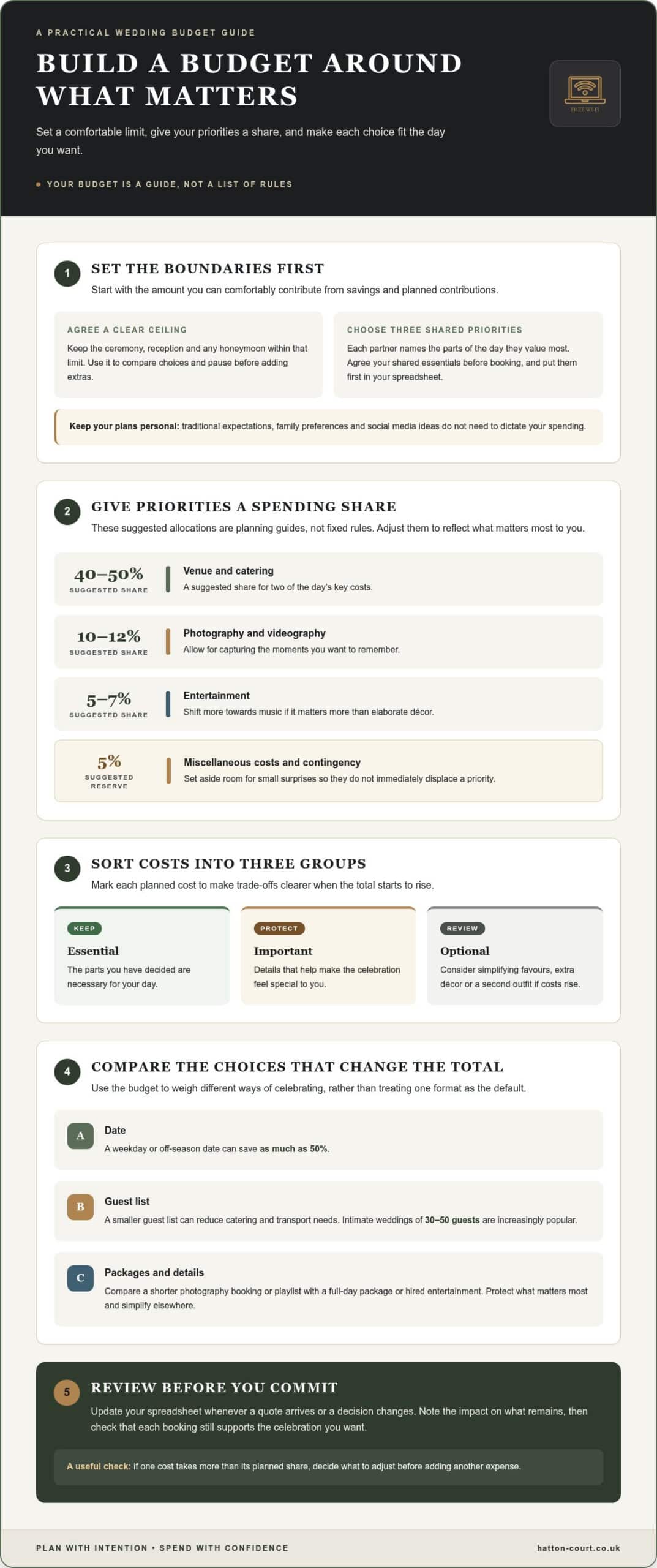
Decide where to simplify before trimming the details you value most. Record each change in your spreadsheet and deliberately redirect any savings.
Compare a traditional sit-down meal with simpler options such as a food truck, pizza or takeaway. Each changes the style of service and how food is served, so consider what suits your guests and celebration. Review drinks separately, and decide what matters most rather than adding every option by default.
Treat flowers and décor as flexible parts of your budget, and set a share that reflects your priorities. Use that as a starting point, then concentrate arrangements where guests will notice them, such as the ceremony space or dining tables. Reuse ceremony flowers at the reception, borrow decorations or buy second-hand items. Skip DIY projects if crafting feels stressful or costs more time than it saves.
Consider booking a photographer for a few hours instead of choosing a 12-hour package. List the moments that matter, such as the ceremony, portraits and the start of the reception, then plan coverage around them. A suggested budget allocates 10-12% to photography and videography, but your priorities should guide the final share.
Buying second-hand, borrowing or reusing clothing can reduce outfit spending without requiring a new design. Set an allowance that includes accessories, and avoid adding items simply because they’re traditional.
Keep the wedding fund separate from everyday spending and schedule regular transfers that fit your income. Savings interest may fall within the personal savings allowance: £1,000 for a basic-rate taxpayer and £500 for a higher-rate taxpayer. Record contributions and interest in your spreadsheet, so the amount available remains clear as plans develop.
List food, drink, flowers, decorations, photography and attire as separate spreadsheet categories. Add each quote and payment, then compare the running total with your savings target. If a new cost pushes you over budget, decide what to simplify before increasing spending. This keeps small decisions connected to the celebration you want.
Build a sample budget by allocating shares before comparing quotes. The percentages below are a starting framework, not a fixed formula; adapt them to your guest list, priorities and available savings.
Use your agreed spending limit as the base, then record each allocation as a percentage of the total. Keep everything in one spreadsheet, with columns for planned share, quoted amount and payment status. This makes it easier to see whether a reception choice affects another category before you commit.
One suggested breakdown gives 50% to the venue, ceremony and catering. Treat this as a starting point, not an automatic spend. A different guide suggests 40% for venue and catering, so choose one approach and avoid stacking both percentages into your sample.
Set aside 10% for photography and videography in one suggested model. Another suggests 7% for entertainment, while a separate allocation gives music and entertainment 4.5%. Choose the approach that matches your plans, and remember that a playlist and a live performance affect the day differently.
A sample allocation assigns 3.5% to cake and additional desserts, 3% to rings and 1% to hair and makeup. Other suggested models allocate 2-3% to stationery. Use these shares to remember often-overlooked details, then adjust them for your choices and guest numbers.
List attire, flowers, decorations, transport, invitations and contingency separately. A suggested sample places 5% towards miscellaneous costs and unforeseen expenses. Don’t treat this reserve as extra spending money; keep it available for costs that arise during planning, such as a change to the reception arrangements.
Add each planned percentage and compare the result with your total. If the shares exceed the whole budget, lower optional categories before cutting essentials. If they leave money unassigned, direct it towards a priority or reserve. Couples weighing venues can explore a countryside wedding setting as part of that comparison.
Use this sample to guide decisions, not to make every wedding look alike. A relaxed schedule, a special reception meal or simpler decorations can each shift the balance. Update the spreadsheet after every decision so the final plan reflects the celebration you can afford.
Hatton Court Hotel offers weddings in a country-house setting, with landscaped gardens and a garden marquee. Once you’ve settled your budget and priorities, consider whether the venue suits the day you have in mind. Cosy, Comfy and Country Rooms offer accommodation options for a wedding stay, while Tara Restaurant serves modern British dishes and traditional Afternoon Tea. These offerings can help shape the wider experience around your celebration as you make spending decisions.
For a closer look at how Hatton Court Hotel could fit your plans, get in touch with the hotel.
Your next step is to create a shared picture of the day your budget can support. Sit down together, talk about the feeling you want guests to take home, and choose one decision to move forward with. A countryside gathering, lively reception or small circle of loved ones can each guide how to budget for a wedding in a way that feels personal, rather than driven by expectations.
If a country-house setting is part of your plans, Hatton Court Hotel offers weddings alongside Cosy, Comfy and Country Rooms for guests’ stays. Considering the venue and accommodation together can help you plan the celebration and time together without losing sight of your priorities.
Take the next step at a pace that suits you. Contact Hatton Court Hotel to explore your wedding plans, and start shaping a day that feels welcoming, thoughtful and truly your own.
Record each commitment as soon as you make it, including deposits, purchases and outstanding balances. Add columns for the supplier, payment date, category and whether the amount is estimated or final. At the end of each month, compare receipts and bank transactions with your records, then update the amount left to spend. This makes missed payments and small purchases easier to spot before they add up.
DIY can be worthwhile when a task is enjoyable, straightforward and genuinely cheaper after materials and tools. Try one small sample, such as a table decoration or place card, and record its full cost before committing. Compare the time involved with buying a ready-made option. If a project becomes stressful or requires repeated purchases, borrowing, reusing or skipping it may suit your plans better.
Yes. Choose a consistent colour palette, use a few well-placed decorations and make the ceremony and reception feel connected. Personal touches, such as handwritten place cards or a carefully chosen playlist, can add warmth without an elaborate set-up.
Set aside a contingency fund so an unexpected expense doesn’t immediately disrupt your plans. One suggested UK budget approach reserves 5% for miscellaneous costs and contingencies. Keep that amount separate from money assigned to suppliers, and note each use in your records. If the reserve remains untouched, you can decide later whether to keep it for final costs or return it to savings.
Agree a spending limit with anyone contributing, and decide who can approve changes before bookings begin. Keep a written record of commitments, not just payments already made, as future balances still count towards the total. Before adding an extra, identify which existing category will fund it. Pausing before non-essential purchases can also help distinguish genuine priorities from impulse decisions.
Start with money already saved, realistic contributions and what you can set aside before the wedding. Subtract any funds reserved for essential household costs or other plans, then use the remainder as your upper limit. A practical way to approach how to budget for a wedding is to plan from the total you can actually afford, rather than choosing ideas first and trying to fund them afterwards.
Wedding costs vary according to guest numbers, venue arrangements, catering and your choices for the day. These figures describe different kinds of celebrations, so treat them as reference points rather than assuming either one matches your plans.
The average UK wedding cost used for the 2026 budget breakdown is £20,604. It’s a broad benchmark, not a recommended spending target or a prediction of your own total. Guest numbers and decisions about the venue, meal and suppliers can shift your costs considerably. Build your plan around the amount you can afford and the parts of the celebration that matter most to you.
















Leave a Comment: