The headline venue fee may not tell the whole story: wedding costs can also include charges for parking, extra hours or equipment hire. The most useful questions to ask a wedding venue cover what’s included, what could cost extra and when payments are due. Clarifying these details early makes it easier to plan with confidence.
It’s natural to focus first on the setting, but practical details shape how comfortably the day unfolds for you and your guests. A little preparation helps you compare venues fairly and avoid surprises as your plans take shape.
This guide gives you a clear checklist covering deposits, additional charges, cancellation or rescheduling, guest accommodation and capacity. You’ll also find prompts about ceremony licensing, accessible seating, wedding breakfast layouts, menu choices, dietary needs and the details that help everyone feel at ease. From your first viewing to the final table plan, you can work through each decision at a relaxed pace.
Key Takeaways
- Ask for a clear breakdown of what the venue hire includes, plus any extra charges for parking, extended hours or equipment.
- Find out about guest bedrooms, nearby places to stay, transport and practical arrangements for children and pets.
- Check the minimum and maximum guest numbers for both the ceremony and evening reception, and how the layout affects comfort.
- Establish whether the venue is licensed for your ceremony and what indoor alternatives are available for an outdoor celebration.
- Discuss menu tastings, dietary needs and table plans early so the wedding breakfast feels welcoming and runs smoothly.
Is there accommodation available for guests?
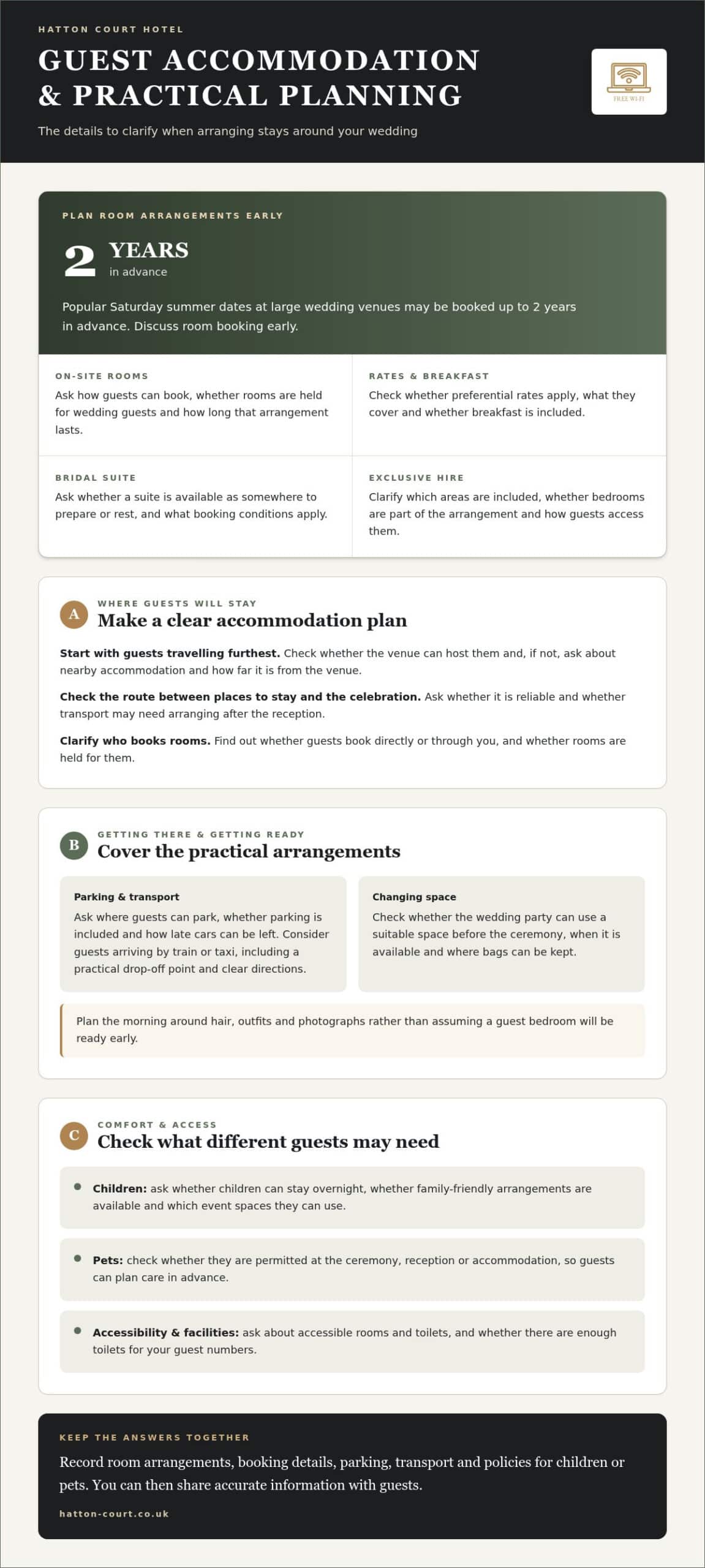
Start with the guests travelling furthest, then consider those who can get home easily. A clear accommodation plan helps guests enjoy the celebration without worrying about late-night transport or an unfamiliar journey.
- Ask whether the venue has on-site accommodation and how guests can book rooms. This gives travelling friends and family a straightforward place to stay, close to the celebration. Ask whether rooms are held for wedding guests, how long that arrangement lasts, and whether guests should book directly or through you.
- Find out whether guest bedrooms, a bridal suite and breakfast options are available. A bridal suite can give you somewhere to prepare or rest, whilst breakfast lets overnight guests start the next morning together. Ask whether preferential rates apply and what they cover, including breakfast or any booking conditions.
- Clarify how exclusive hire affects accommodation. Ask which areas are included, whether bedrooms are part of the arrangement, and how guests access them during the event. This detail helps you understand whether exclusive use means a private celebration only, or also covers the overnight stay.
- Ask about nearby accommodation for your wedding date. If the venue cannot host everyone, nearby rooms may give guests another option. Ask how far they are, whether there is a reliable route between them and the venue, and whether transport needs arranging after the reception.
- Make a parking and transport plan for guests staying overnight. Ask where guests can park, whether parking is included, and how late they can leave their cars. For guests arriving by train or taxi, share the nearest practical drop-off point and arrange clear directions with your invitations.
- Check the getting-ready arrangements before the ceremony. Ask whether the wedding party can access a suitable changing space, when it is available, and where bags can be kept. This helps you plan the morning around hair, outfits and photographs without relying on a guest bedroom being ready early.
- Ask about the venue’s policies for children and pets. Clarify whether children can stay overnight, whether family-friendly arrangements are available, and which event spaces they can use. For pets, ask whether they are permitted at the ceremony, reception or accommodation, so guests can plan care in advance.
- Check the booking timeline and any practical facilities. Popular Saturday summer dates at large wedding venues may be booked up to 2 years in advance, so discuss room booking early. Ask about accessible rooms and toilets, and whether the venue has enough toilets for your guest numbers.
Keep the answers together in your planning notes. A simple record of room arrangements, parking, transport options and policies for children or pets makes it easier to share accurate details with guests.
What Questions Should I Ask At A Wedding Venue Viewing?
Ask the venue to explain its rules for catering, alcohol, suppliers, decorations and music. These policies shape your choices, from bringing in a preferred caterer to setting a finish time for the evening reception.
Bring a written list of questions to your viewing and note the answers alongside each venue’s package details. This makes it easier to compare what’s included, what you’ll need to arrange separately and how each option could affect your guests’ experience.
- Ask what each catering package includes. Check whether meals, drinks, table settings and evening food are covered, or priced separately. For an all-day celebration, ask what’s served during the wedding breakfast and later in the evening. A sample schedule can show how meal times fit around speeches, photographs and dancing.
- Find out whether you can attend a menu tasting. Sampling dishes gives you a chance to discuss flavours, portion sizes and menu preferences before making decisions. Ask when the tasting happens in the booking process, who can attend and how your final selections are recorded. This helps align your menu choices with the style of your day.
- Explain dietary requirements and ask how they’re handled. Discuss allergies, vegetarian or vegan meals, and any other needs guests may share. Ask how those details are collected, passed to the kitchen and matched to individual place settings. A clear process helps guests receive the right meal without confusion during service.
- Ask about meals and drinks for children. If children are attending, find out whether there are child-friendly meal choices and how these fit into the serving plan. Discuss suitable non-alcoholic drinks and whether children’s meals can be served at the same time as the adults’ courses.
- Clarify alcohol arrangements and supplier choices. Ask whether drinks are provided through a package, selected from the venue’s options or brought in by you. Find out whether catering, photography and entertainment must come from preferred suppliers, or whether you can book your own. These rules can affect your plans and booking decisions.
- Check restrictions on decorations, music and timing. Ask whether candles, confetti or particular decorations are permitted, and whether the venue has a music finish time. If you’re planning a band or DJ, discuss the room set-up and when entertainment must end. Some venues allow celebrations to run later for an additional fee.
Keep the answers together, including menu options, supplier rules and evening timings. You’ll have a practical record to revisit as guest numbers and dietary details take shape.
As you compare wedding-day arrangements, add Weddings at Hatton Court Hotel to your shortlist and use these same questions to guide your viewing.
How many guests can the venue hold?
Ask for the minimum and maximum guest numbers for both the ceremony and evening reception. A venue may seat one number for the vows and accommodate a different number for dinner and dancing. Compare each figure with your guest list and the atmosphere you want, rather than relying on one headline capacity.
Venue hire and catering typically account for roughly 45% of a wedding’s total budget, so guest numbers and package inclusions can affect the overall spend. Ask how the venue’s hire fees are structured and what changes if your final numbers differ from your estimate. Also compare the deposit, when the balance is due, and the consequences of cancelling or rescheduling before booking.
- Ask for separate capacities for the ceremony, seated meal and evening reception. Different layouts use the same room differently, so one maximum figure may not describe every part of your day.
- Request a floor plan showing tables, chairs and any dance floor. A plan helps you see whether guests can move comfortably between their seats, the bar and the entertainment area.
- Explain your vision for the room. Share whether you prefer long banquet tables, smaller round tables or space for dancing, because each arrangement affects the usable guest capacity.
- Ask about minimum numbers and how they affect the booking. A minimum may influence which rooms or packages suit your celebration, particularly if your guest list is intimate.
- Check whether children and suppliers count towards the stated capacity. Clarifying who is included gives you a more accurate working total for invitations and the seating plan.
- Ask how late the reception can run and whether the room must be cleared at a set time. Timings affect the evening schedule, including speeches, entertainment and the final departure of guests.
- Check your preferred date alongside the available room options. If the first choice is booked, ask which alternative dates or spaces can accommodate your intended guest numbers.
Make the coordinator’s answers part of your planning notes: record the room, layout, guest range and reception finish time together. This gives you a useful comparison between venues and helps keep later decisions, such as invitations and table arrangements, aligned with the space.
For an accurate comparison, note the quoted hire inclusions alongside the guest capacity, rather than comparing venue names alone. This makes it easier to see whether a room suits your guest list, preferred layout and evening plans.
Civil ceremony licensing and outdoor ceremonies
A beautiful garden setting and a lawful civil ceremony are separate considerations. Some wedding reception venues aren’t licensed to host wedding ceremonies, so ask specifically whether your chosen ceremony can take place there. If you plan to marry elsewhere and celebrate at the venue, establish how travelling between locations fits your schedule.
Use your viewing to walk through the ceremony space, the route guests will take and the transition into the reception. Ask these practical questions:
- Is the venue licensed to host the civil ceremony? This distinguishes a ceremony venue from a reception-only space and helps you understand whether both parts can happen in one place.
- Which specific rooms or outdoor areas can host the ceremony? The answer clarifies where the vows can take place, rather than relying on a general description of the grounds.
- Can you hold the ceremony and reception at the same venue? A single location can simplify the day’s movements, whilst a separate ceremony location means planning guest travel and arrival times.
- What changes if you choose an outdoor ceremony? Ask which outdoor space is suitable and what facilities guests can use before, during and after the vows.
- What is the indoor alternative if the weather turns? Walk through the wet-weather space and ask how seating, decorations and the ceremony layout would transfer indoors.
- When is the decision made between outdoor and indoor spaces? A clear decision point helps you coordinate suppliers, seating and guest instructions without last-minute uncertainty.
- Can the ceremony layout accommodate your guests comfortably? Check the view from the back rows, the aisle route and the space needed for any mobility aids.
- How will the ceremony schedule connect to the reception? Ask where guests go afterwards, how the room is prepared and whether there’s time for photographs before dining.
- Can the venue accommodate dietary needs during the wider celebration? Discuss how meal requirements are gathered and passed to catering, so the ceremony-to-reception plan includes guests’ practical needs.
- Which suppliers can work in the ceremony space? Ask about access for musicians, florists or photographers, and any restrictions that affect their set-up.
During the viewing, picture the same sequence in sunshine and rain: guests arrive, find their seats, attend the ceremony and move to the reception. A clear plan for both settings helps you compare the spaces and share consistent information with guests and suppliers.
Wedding breakfast seating and menu choices
The wedding breakfast sets the pace for your celebration, from the first course to the speeches. At your viewing, discuss the meal style and seating together. A formal seated meal feels different from seasonal dishes served more informally, and each option affects the room layout, service and time guests spend at the table.
- Ask what meal styles the venue can accommodate. Compare a formal seated wedding breakfast with seasonal dishes, then consider which best suits your special day. The service style influences how guests gather, eat and move into the next part of the celebration.
- Ask to see sample menus and discuss how dishes can be adapted. A menu tasting lets you sample dishes and talk through your preferences and guests’ dietary requirements. This makes it easier to choose a menu that feels cohesive rather than selecting each course in isolation.
- Explain dietary needs and ask how they’ll be recorded. Discuss allergies, vegetarian or vegan meals and other requirements with the venue team. A clear method for collecting and sharing this information helps ensure the kitchen can match dishes to guests at the table.
- Ask how the table layout affects the meal. Look at plans for round tables, long tables or a top table, and consider how each arrangement suits your guest list. The layout also affects conversation, sightlines and space for serving courses.
- Find out when the final table plan is due. Some venues handling the set-up require the completed plan weeks in advance. Knowing the deadline helps you organise guest names, dietary details and any seating changes in good time.
- Check how place settings and table decorations are arranged. Ask what the venue provides and when your chosen details need to be delivered or set out. This helps you plan the tables without overlooking practical needs such as readable place cards.
- Discuss food for the evening as well as the wedding breakfast. For an all-day wedding, ask what catering options are available during the day and later in the evening. This helps you plan the flow of food around speeches, dancing and the reception schedule.
- Ask how a room changeover works if the same space serves both parts of the day. Find out how long the changeover takes and where guests wait. That detail helps you plan photographs or a drinks reception while the room is prepared.
Use the viewing to picture guests seated, courses served and the room being set for the evening. Note the menu decisions, seating style and table-plan deadline together, so each choice supports a relaxed flow.
Explore wedding celebration options as you plan the meal and seating for your day.
Hatton Court Hotel: Cosy Rooms
Hatton Court Hotel offers weddings alongside Cosy Rooms, Comfy Rooms and Country Rooms for guest stays. If you’re considering ceremony plans, guest accommodation and a relaxed country-house setting, explore the hotel as you compare your venue checklist. Scenic views and comfortable rooms can make the stay part of the occasion for travelling friends and family. Afternoon Tea offers another way to enjoy a leisurely visit. Consider how the setting and rooms fit your celebration and your guests’ stay. Find out more at hatton-court.co.uk.
Choose the setting that feels right
Your venue choice gives the whole celebration its shape. Before deciding, talk together about the feeling you want guests to take home: a relaxed countryside gathering, a lively evening with room to dance, or a day centred on time with family. Let that vision guide which details matter most and where you’re happy to be flexible.
The questions to ask a wedding venue are most useful when they help you picture your own day in the space, from the first welcome to the last farewell. Hatton Court Hotel hosts weddings and offers Cosy Rooms, Comfy Rooms and Country Rooms for guest accommodation. Explore whether the setting suits your plans at your own pace.
Contact Hatton Court Hotel to start a conversation about your wedding plans. You’re one thoughtful decision closer to a celebration that feels entirely your own.
Frequently Asked Questions
What Hidden Costs Should I Ask About?
Ask whether parking, extra hours or equipment hire could add charges beyond the headline venue fee. Find out what triggers each charge, such as extending the music or requesting additional furniture. Request an itemised estimate separating included services from optional extras. This gives you a clearer planning figure and helps you compare venues on the same basis, rather than weighing one headline fee against another.
Can I Use My Own Suppliers?
Some venues require couples to use preferred suppliers for catering, photography or entertainment; others allow you to bring your own. Ask which categories have restrictions and whether the rules apply throughout the day. If you’ve already chosen a photographer, for example, clarify their access to the spaces and arrival arrangements. Keep supplier rules with your booking notes so your plans fit the venue’s arrangements.
Can you hold a tasting session before the big day?
Ask whether a menu tasting is available and which dishes you can sample. Use the session to discuss flavour preferences, dietary requirements and possible menu adjustments. For example, if you’re choosing between two main courses, ask how each fits with the rest of the meal. Before you leave, note your preferred dishes and how you’ll share the final menu choices with the venue team.
Is there a set curfew for the reception?
Reception timings vary: some venues have a strict curfew, while others may let celebrations run later for an additional fee. Ask when music must stop and whether that differs from when guests need to leave. If you’re planning a DJ or live band, clarify how the finish time affects their performance. Record the agreed timings so your entertainment and evening schedule work around them.
What happens if the weather is bad?
For an outdoor ceremony or reception, ask what indoor backup space or covered area is available. Walk through the alternative during your viewing, checking how guests would reach it and where seating would go. Ask how a decision to move indoors fits the day’s arrangements, including supplier set-up. Seeing both options helps you picture the celebration in changeable British weather and explain the plan clearly to guests.
What’s Included In The Venue Price?
Ask for an itemised breakdown of the venue fee and what it covers. Separate room hire from catering, drinks, table settings and equipment, then note which items are optional. Check whether the quoted arrangement matches your intended date, guest numbers and event format. This helps you understand what the headline price represents and which parts of the celebration need a separate budget.
What’s included in the package?
Wedding packages may include catering, drinks, table settings or a DJ, so ask for the inclusions in writing. Check whether the package offers choices, such as different meal options, or sets a particular arrangement. Ask how an item you don’t need is handled and whether you can add something important to your plans. A clear list makes package comparisons more useful than names or descriptions alone.
What questions should you ask a wedding venue before booking?
Before booking, ask about date availability, ceremony and reception capacities, ceremony licensing, payment timings and cancellation or rescheduling terms. Add practical questions about supplier access, set-up arrangements and policies for music and decorations. Useful questions to ask a wedding venue should reflect your plans, not just cover general details. Keep the answers together and resolve any unclear terms before you commit.


















Leave a Comment: