
17 November 2026


A quick reply can help, but it isn’t the same as a confirmed wake booking. Hatton Court Hotel supports families across the UK in finding suitable spaces, and while local options like those within 10 miles of Gloucester offer a practical starting point when time is short, the venue’s availability and the arrangements needed still shape what can be booked.
It’s understandable to want clear answers quickly, especially when you’re balancing guest numbers, timings and family wishes. This guide to wake venues in Gloucestershire and nationwide covers room options, stated capacities and celebration-of-life gatherings, as well as practical questions to ask about costs and arrangements.
You’ll also find a straightforward way to think about function rooms, from choosing a space that feels comfortable for your gathering to understanding which details can affect the arrangements. The useful starting points are the room’s stated capacity, the time available and the kind of welcome you have in mind, helping you make a considered choice without adding more pressure at an already difficult time.
Venue charges depend on the space, guest numbers and catering format, so compare itemised quotes rather than assuming one rate applies across Gloucestershire. Parking and step-free access vary by venue, so confirm these details as part of your planning.
For a fair comparison, give each venue the same requirements: room hire, expected attendance, catering and the time the space is needed. A smaller gathering and a larger reception may call for different rooms and arrangements. Ask for costs to be itemised, then compare like with like.
Location offers another useful point of comparison. There are nine wake venues listed within 10 miles of Gloucester: four in Gloucester itself, while five are in Cheltenham and Stroud, within about 10 miles. These locations provide a choice between a venue in town and options in nearby areas, without establishing a standard price or capacity for any one space.
For receptions after a funeral at Gloucester Crematorium, Gloucester town centre is about 1.1 miles away. Cheltenham Crematorium is 7.2 miles from Gloucester town centre, while Forest of Dean Crematorium is 13 miles away. These distances can help families and a funeral director consider where guests may be travelling from; they don’t determine venue charges.
When discussing costs, explain the gathering’s likely size, preferred location and meal format. The venue can then price the relevant room and arrangements rather than an unsuitable alternative. A written breakdown also helps families see whether room hire and food are quoted separately, and which choices change the total.
Funeral tea, a buffet and a seated meal are different formats to discuss with the venue. Tea or a buffet may suit guests gathering informally, while a seated meal gives the reception more structure. As the choice affects catering and space, mention your preference when requesting a quote.
Families can coordinate timings through the funeral director, who can share the expected schedule with the venue. Confirming the anticipated arrival time and meal format, for example, helps the venue plan the reception around the service. Ask how the quote separates food from room hire and whether the arrangements suit the expected guest numbers.
Compare each venue’s location, room capacity and catering arrangements against your family’s needs. If proximity to Gloucester Crematorium matters, include it in your decision; if guests are coming from elsewhere, consider the locations that work for them. Reviewing these details together gives you a clearer basis for comparing costs.
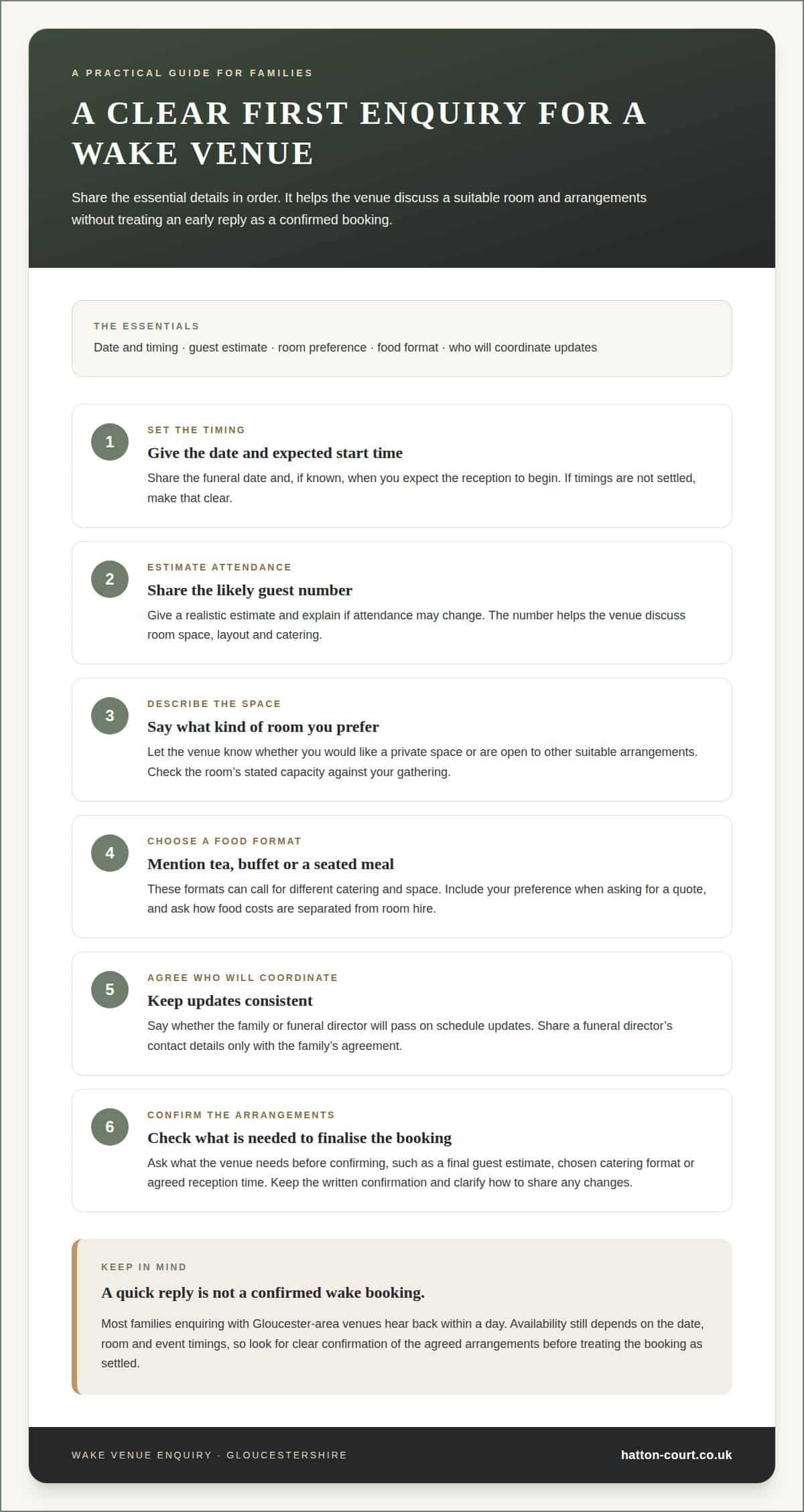
For a funeral wake, the first enquiry helps establish whether a venue can accommodate the proposed date, timing and arrangements. Most families enquiring with Gloucester-area venues hear back within a day, but a reply is not the same as a confirmed booking.
For a short-notice enquiry, include the service date, likely arrival time, estimated guest numbers and preferred reception style in your first message. If a funeral director is coordinating timings, mention this and share their contact details only with the family’s agreement. This gives the venue a practical starting point for discussing the booking.
For an efficient enquiry, set out the essentials in a simple order:
These details help focus the conversation on a suitable funeral wake venue. When contacting wake venues in Gloucestershire, distinguish between details that are settled and those that may change. This keeps early discussions practical without treating a provisional plan as a final booking.
During the enquiry, ask what the venue needs before confirming the arrangements. This could include the final guest estimate, chosen catering format or agreed reception time. Ask how to share changes, too. One family contact can help keep updates consistent when several relatives and the funeral director are involved.
Availability depends on the date, room and event timings, so a prompt reply does not mean a space is reserved. Look for clear confirmation of the agreed date and arrangements before treating the booking as settled. Keep the venue’s written response with the funeral details, particularly if timings or attendance change.
When contacting wake venues in Gloucestershire, use the same concise enquiry for each venue. Keep the date, timing and guest estimate consistent, then record each response separately. This makes it easier to compare possible arrangements and identify where further discussion is needed, without mistaking an initial reply for a confirmed reception.
A room’s stated capacity gives families a starting point, but guest numbers shape the whole reception. They influence the space required, the seating plan and how comfortably people can gather. For a wake in Gloucestershire, share an estimated attendance with the venue, then discuss the room layout and meal format alongside that figure.
Use a realistic estimate rather than choosing a room based on its maximum capacity alone. Relatives who want to sit together need a different layout from guests arriving and leaving at different times. A seated meal, for example, uses the space differently from afternoon tea at a more informal gathering.
The Cotswold Room is a useful example of why stated limits matter: don’t assume it can accommodate more than 50 guests. A published capacity is tied to a particular room and arrangement, so it shouldn’t automatically be applied to another space or event format. Where a venue gives separate figures for seated and standing arrangements, compare the one that matches the gathering.
Guest numbers may change as family members confirm their plans. Give the venue an early estimate, explain if it may shift, and agree how to share updates. This allows the venue to discuss whether a room is suitable without treating a provisional number as final. If attendance grows, you may need a larger space; if it falls, a smaller room could feel more fitting.
For a private reception, ask how the proposed room would be arranged for your gathering. “Exclusive” can mean different things, so distinguish between a private room and exclusive use of a wider venue. This clarifies which space guests will use and what the arrangement covers.
Afternoon tea may suit a quieter gathering, while a larger group might prefer a format that lets guests move around. Guest numbers alone don’t determine the right choice: consider how people will gather, eat and talk. A clear estimate, suitable room capacity and agreed layout give the venue practical details for discussing arrangements.
A celebration of life can take many forms, from a quiet family gathering to a larger reception. Start by deciding what matters most: time together, sharing memories, catering or a particular atmosphere. This helps shape the venue enquiry around the person being remembered, rather than a prescribed event format.
Think about how guests will spend their time. Some families may want a seated meal and space for conversation; others may prefer a more informal gathering, with refreshments and time to mingle. If relatives are travelling from Tewkesbury or elsewhere in Gloucestershire, include their likely arrival patterns in discussions about timing. This can help the venue understand the practical shape of the occasion.
Photographs, flowers or treasured objects can make a gathering personal. Describe what you have in mind to the venue, including the items’ size and where guests might see them. Discuss how the display could fit the room and planned layout, rather than assuming a particular table or display area is available.
Choose catering in keeping with the family’s wishes. A funeral tea, buffet or seated meal creates a different rhythm for the reception, so explain your preference when requesting details. If you are considering a package, ask for its contents to be set out clearly. Compare the catering and room arrangements included rather than relying on the word “package” alone.
Appointing one family contact to coordinate details with the venue and funeral director can help keep arrangements clear. They can share the schedule, update guest estimates and pass on decisions about catering or a display. If service timings change, for example, one contact can communicate the revised plan and reduce conflicting messages.
Use a short planning list to keep the celebration’s practical details together:
These choices give the venue useful context without making the occasion feel over-planned. A clear brief helps staff discuss a suitable room and practical arrangements, while leaving the family free to shape a respectful gathering in its own way.
A suitable function room gives guests a setting for conversation, refreshments or a celebration of life. Consider the room’s purpose, planned arrangements and personal touches that matter to the family.
Facilities vary by venue, so compare the specific room and arrangements offered for your reception. Consider whether the space suits the intended seating and catering format, and allows guests to gather comfortably. Assess stated capacity alongside the layout rather than treating it as the only measure of suitability.
A buffet reception, for example, may need a different layout from a seated gathering. Tell the venue how you expect guests to use the room, then discuss arrangements that fit. This helps establish what the space can accommodate without assuming every venue offers the same facilities.
Ask about the proposed room, including how food service and guest seating would be arranged. If guests are likely to arrive at different times, mention this when discussing the event. Describing the reception clearly helps the venue consider practical details before plans are settled.
Private rooms and memorial displays are possible arrangements to discuss, but their availability varies by venue and room. Explain whether the family would like a dedicated space, photographs on display or another personal touch. The venue can then discuss how those wishes fit the room and the reception’s planned layout.
For a display, describe the items and where guests might gather around them. A collection of photographs, for instance, may need a considered position where guests can see it without disrupting the buffet or seating. Confirm what display furniture or space is available.
Share other personal preferences in the same conversation. Your family might prefer a quieter setting for conversation or a room arranged to bring guests together around a meal. Explain the intended atmosphere and practical needs so the venue can respond to the purpose of the gathering.
Before settling arrangements, ask the venue to describe the room setup and any agreed display plans. Keep these details with the reception schedule, especially if the family changes the catering format or layout. This gives everyone a shared understanding of the arrangements and helps honour the wishes behind the celebration of life.
Compare function rooms by the arrangements relevant to your gathering, not by a broad facilities list alone. A buffet, private setting or memorial display can each affect how the space is used. Discussing the room, its purpose and the family’s priorities helps identify a setting that is appropriate and practical.
Hatton Court Hotel offers Celebration of Life Gatherings in a considered setting for remembrance. Hatton Court Hotel, Upton St Leonards, near Gloucester, Gloucestershire, Cotswolds. Families can discuss the gathering’s tone and the arrangements that matter most with the hotel.
When discussing a gathering, share its purpose and the details that matter to your family. Hatton Court Hotel also offers Cosy Rooms, Comfy Rooms and Country Rooms, as well as Afternoon Tea. These are separate offerings, not stated inclusions in wake arrangements.
To discuss a Celebration of Life Gathering, contact Hatton Court Hotel.
Consider what would help your family feel at ease on the day. A familiar photograph, a few words shared over refreshments or simply time together can give the gathering its own shape. Let these priorities guide your conversation with the venue; there is no need to create a particular kind of occasion.
If you’re considering wake venues in Gloucestershire, Hatton Court Hotel offers Celebration of Life Gatherings. Its Cosy Rooms, Comfy Rooms and Country Rooms provide accommodation options for guests, separate from the gathering arrangements. Discuss the occasion and the details that matter to you directly with the hotel.
There’s no need to have every detail settled before starting that conversation. A clear sense of what feels important can be a gentle first step towards making arrangements that suit your family. Contact Hatton Court Hotel to discuss a celebration of life gathering.
Make a short-notice enquiry as soon as the service timing is known. Include the proposed date, reception start time and approximate guest count, then identify details that may change. If a funeral director is coordinating the service, agree who will send updates to the venue. This gives the venue a clear outline for discussing arrangements without treating an enquiry as a completed booking.
Yes, a family can plan a brief tribute as part of the gathering. Choose a suitable point, such as before refreshments, and tell the venue the intended timing. If several people hope to speak, one family member can coordinate the order and share it with the venue. Ask separately about any equipment needs.
Options include hotels with event spaces and venues with private function rooms. The key question is whether the venue accepts memorial gatherings and can discuss arrangements suited to the family’s purpose. Shortlist settings that fit your needs, then enquire about event-specific details rather than assuming every function room is suitable for a wake.
Each venue has its own address and enquiry channel, so contact details need to be matched to the place you’re considering. For Hatton Court Hotel, the events contact details are 01452 651172 (subject to confirmation) and events@hatton-court.co.uk. For another venue, use its own event contact information. When you enquire, include the date and the name of the person coordinating the arrangements.
Ask for a written quote based on your event rather than relying on a general hire figure. State whether you need room hire, catering or both, and ask how any additional arrangements are itemised. Before agreeing, make sure you understand what the quote covers and whether changes to your plans affect it. Charges and terms vary by venue.
Ask about drinks as well as food, including whether tea, coffee and other refreshments can be served throughout the gathering. If a bar matters to your plans, ask whether one is available and how it would operate. Share dietary requirements when discussing catering, and request the menu details for your event rather than assuming every option suits every occasion.
There is no single guest limit for all venues. A room’s capacity may depend on its intended layout, so ask for the figure that applies to your setup. Consider whether guests need space for a display, refreshments or private conversation. These priorities can affect which room feels right for the gathering.
Ask the venue to set out its booking process and terms before you commit. Read the deposit requirements, payment deadlines and cancellation conditions, then keep a copy with the event details. Clarify who can make changes on the family’s behalf, too. If the service schedule changes, the agreed contact can give the venue consistent instructions.

















Leave a Comment: