
21 October 2026


The view can be as memorable as the tea. A traditional afternoon tea in the Cotswolds is typically served between four and five o’clock, with finger sandwiches, scones with clotted cream and jam, and sweet pastries. Prices and menus vary by venue, and vegetarian, vegan or gluten-free choices depend on what each menu offers.
It’s easy to picture the tiered stand, the first warm sip and countryside beyond the window. Choosing where to go also means weighing up the setting, what’s served and whether the menu suits everyone at the table.
This guide compares Cotswolds afternoon tea prices, menus, serving times and countryside views. It also explains what to look for in vegetarian, vegan or gluten-free options, so you can plan your visit and choose a setting that suits the occasion.
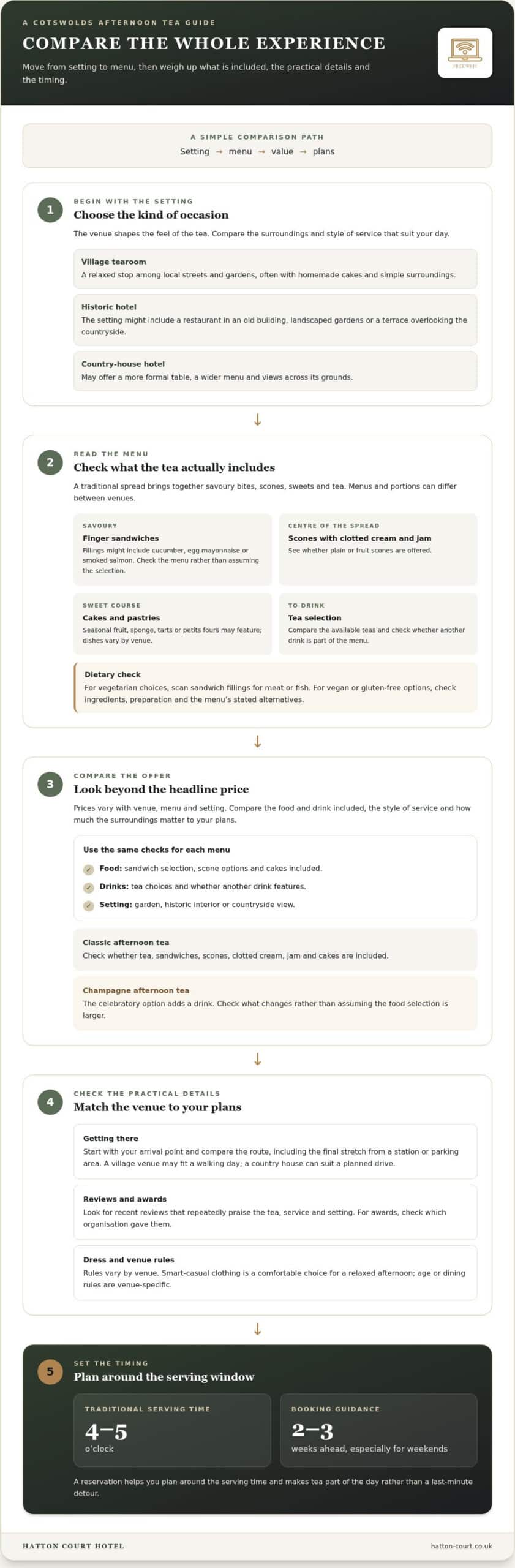
The cost of afternoon tea in the Cotswolds depends on the venue, menu and setting. A village tearoom, a historic hotel restaurant and a country house offer different experiences, so compare what each includes rather than judging by price alone. Check whether tea, sandwiches, scones, cakes and service are included.
Village tearooms can make a relaxed stop during a day exploring local streets and gardens. Their homemade cakes and simple surroundings suit a casual catch-up, while a country house hotel may offer a more formal table, a wider menu and views across its grounds. Both serve a quintessentially English spread, but the experience differs.
At a historic hotel, the setting is part of the occasion: perhaps a restaurant in an old building, landscaped gardens or a terrace overlooking the countryside. A manor-house tea may place greater emphasis on presentation, a wider choice of teas or several courses. To compare value, consider the food and drinks included, and how much the surroundings matter to your plans.
Which Cotswolds afternoon teas have the best reviews or awards? Look for recent guest reviews that repeatedly praise the tea, service and setting. For awards, check which organisation gave them. These details offer a more useful comparison than a high overall score alone.
Which venues are easiest to reach by public transport or car? Start with your arrival point, then compare the route to each tearoom or hotel, including the final stretch from a station or parking area. A village venue may fit a walking day, while a country house can suit a planned drive.
Do venues require advance booking? Popular Cotswolds venues should be booked at least two to three weeks ahead, especially for weekends. A reservation helps you plan around the serving time and makes the tea part of the day, rather than a last-minute detour.
Are there dress codes, age limits or other rules? These vary by venue, so treat a village tearoom and a formal country-house restaurant as different settings. Smart-casual clothing is a comfortable choice for a relaxed afternoon; any age or dining rules are venue-specific.
Traditional afternoon tea in the Cotswolds brings together fine tea, finger sandwiches, scones with clotted cream and jam, and sweet pastries. The balance matters: savoury bites begin the spread, scones make a comforting centrepiece, and small cakes provide a final treat. Each element brings a different texture, from soft bread to crisp pastry.
Finger sandwiches are easy to eat by hand. Classic fillings might include cucumber, egg mayonnaise or smoked salmon, while menus may change with the seasons. Read the descriptions rather than assuming every tea serves the same selection. A concise menu can still feel generous when its sandwiches, scones and cakes are carefully prepared.
Seasonality often shows most clearly in the sweet course. A menu might pair a familiar sponge with seasonal fruit or feature a tart alongside petits fours. These examples can help you read a menu, but dishes vary between venues. Homemade baking brings a personal touch, while polished pastries may suit a more formal setting.
Scones deserve their own moment. Enjoy them warm, split open and topped with clotted cream and jam. Some people spread the jam first, while others start with cream; either way, soft crumb, rich cream and bright fruit make this a defining part of the experience. Check whether the menu offers plain or fruit scones, as that small detail can shape the plate.
Tea completes the menu, so consider the choice as well as the food. Classic black tea pairs comfortably with sandwiches and rich cakes, while a lighter blend can suit delicate pastries. If you have a preferred style, check the tea list to choose a drink that complements the spread.
Dietary needs call for a closer look at ingredients and preparation. Vegetarian diners can scan sandwich fillings for meat or fish; vegan guests should consider both savoury items and baking ingredients. For gluten-free choices, check whether the menu describes suitable alternatives. These distinctions matter because a standard afternoon tea includes several components, not just one cake or sandwich.
Before booking, compare the savoury and sweet choices, tea selection and any dietary information on the menu. This helps you choose between a village tearoom’s relaxed, homemade feel and a country-house restaurant’s more formal presentation. The best menu is the one that suits your tastes, your table and the pace you want.
Afternoon tea prices vary with the venue, menu and setting, so compare the whole experience rather than one headline figure. A village tearoom, hotel restaurant and country-house dining room offer different surroundings and styles of service. Their menus may also vary in tea choice, savoury portions and the number of sweet treats.
Start with the classic afternoon tea. Check whether the menu includes tea, sandwiches, scones, clotted cream, jam and cakes. A spread with these familiar elements may suit a relaxed catch-up, while a more elaborate menu might add courses or a wider tea selection. The description tells you more about value than the word “classic” alone.
Champagne afternoon tea is a more celebratory choice, adding a drink to the traditional food. Compare it with the standard menu by checking what changes, rather than assuming the extra cost means a larger food selection. For a birthday or special occasion, the setting and leisurely pace may matter as much as the drink.
For a straightforward comparison, note these details from each menu:
These details help explain why two Cotswolds venues can charge differently without offering the same experience. A tearoom focused on homemade cakes offers a different kind of afternoon from a manor-house restaurant with formal service. Neither is automatically better value. The right fit depends on the food you want, the occasion and how much the surroundings matter.
Consider the whole outing, too. A village tea can fit neatly between a walk and browsing local shops, while a country-house visit may be the main event. If a beautiful setting is your priority, a garden or room overlooking the landscape can add to the experience without changing the menu. Decide what matters most before comparing options.
Read the menu before booking and compare like with like. Look for serving details, dietary information and any stated additions, then choose the classic spread or champagne option that suits your plans. This makes afternoon tea prices easier to assess, even when menus and settings vary across the Cotswolds.
Afternoon tea has traditionally been served in England in drawing rooms during the late afternoon. That timing offers a useful starting point for planning a Cotswolds visit. It leaves room for a gentle pause before evening plans, with tea, savoury bites and sweet treats enjoyed at an unhurried pace.
The custom is linked to Anna, the seventh Duchess of Bedford, who introduced afternoon tea in 1840. She became hungry at four o’clock, whilst her evening meal was typically served at eight o’clock. Tea and a small meal bridged the long gap between lunch and dinner. That history explains why the afternoon, rather than lunchtime, remains central to the ritual.
For a practical plan, choose your tea sitting first, then work backwards from your other activities. An afternoon sitting may suit a late lunch and an easy stroll beforehand. A later sitting can leave more of the day free for exploring a village or garden. Either way, allow time to savour the food rather than squeezing it between rushed stops.
Serving days and hours differ between venues. A village tearoom may follow a different schedule from a country-house restaurant, and seasonal opening patterns can affect which days are available. Build your itinerary around the serving time shown for your chosen venue, especially if afternoon tea is the main reason for visiting. This helps you avoid arriving before service begins or planning another activity too tightly.
The afternoon setting also suits a celebratory treat. A classic tea brings sandwiches, scones with clotted cream and cakes; a glass of champagne can make the occasion feel more special. The late-afternoon timing gives you room to enjoy each course, whether you’re catching up with friends or marking a birthday. Leave enough time to relax over the pot.
If you’re travelling across the Cotswolds, consider the journey alongside the sitting. A country walk before tea can work well with an afternoon booking, while a longer drive may call for a more leisurely start. Plan travel, arrival and the meal together. That keeps the day calm, rather than turning a quintessentially English pause into a dash.
Use the traditional afternoon timing as a guide, then shape the day around the venue’s serving schedule. Set aside time for the full spread, from the first cup to the final cake, and keep other plans flexible. With that simple order, afternoon tea becomes a restful centrepiece for a day in the countryside.
A countryside view can make the setting as memorable as the menu. Afternoon tea may be served beside a garden, in a country-house dining room or near open countryside. Choose the kind of outlook you’d most enjoy lingering over, whether leafy greenery, rolling fields or wide skies.
Think about how you want to experience the scenery. A garden setting brings you close to flowers and leafy paths, while a window seat keeps the view in sight throughout tea. An indoor table can be comfortable if you’d rather enjoy the landscape from shelter. The setting changes the mood, even when delicate finger sandwiches and freshly baked scones remain at the heart of the spread.
For a picturesque afternoon, plan the visit as part of a wider countryside day. Pair tea with a village stroll, a garden visit or a slow drive along rural lanes. Keep the journey and serving time in mind, so you arrive ready to enjoy the view rather than watching the clock. A peaceful outlook can make the occasion just as inviting as a luxurious room.
Popular venues should be booked at least two to three weeks ahead, especially for weekends. That lead time matters if you’re hoping to visit at a particular point in the day or make afternoon tea the centrepiece of an outing. Build your plans around the booking, then leave room to enjoy the setting before or after the meal.
When comparing afternoon teas, look beyond the menu description. Consider whether you’d prefer garden greenery, open countryside or the character of a historic interior. Then weigh that against practical details such as the route, serving time and meal selection. This makes it easier to choose a view that suits your pace, rather than selecting a venue on scenery alone.
For tea in a peaceful countryside setting, explore a countryside afternoon tea and picture a relaxed pause surrounded by open views. It’s a lovely choice when the landscape, the table and the unhurried feeling of the afternoon come together.
Hatton Court Hotel brings countryside afternoon tea and a restful stay together in a peaceful country-house setting, with panoramic views across the Severn Vale. Its setting makes it a natural choice if you’d like to pair tea with a slower escape. Enjoy Afternoon Tea as a standalone occasion, or make it part of a break in one of the Cosy Rooms, Comfy Rooms or Country Rooms.
This is a lovely fit for a relaxed visit with scenic surroundings, whether you’re planning a gentle afternoon or a countryside stay. The hotel also offers a comfortable base for exploring the wider countryside.
For details, contact Hatton Court Hotel or visit hatton-court.co.uk.
Planning a traditional afternoon tea in the Cotswolds is less about ticking off a famous address and more about choosing the feeling you want to take home. Think about who you’re sharing the occasion with, how long you’d like to linger, and whether the day should feel celebratory or simply restful. That small decision can turn a meal into a welcome pause from everyday routines.
Give the outing room to unfold. Leave space for an unhurried conversation, a favourite view or a gentle wander afterwards, rather than packing the day with plans. If you’re arranging a special gathering, consider what would make the experience personal to those joining you. A thoughtful setting and a little breathing space can make the afternoon feel all your own.
For a countryside visit shaped around your plans, contact Hatton Court Hotel. Take the next step towards a relaxed occasion, and look forward to a lovely afternoon together.
Yes, options depend on the menu and how each part of the tea is prepared. Vegetarian choices may cover savoury fillings, while vegan and gluten-free requirements can affect sandwiches, scones and cakes. When comparing menus, look for details covering the whole serving, not just one item. That makes it easier to choose a spread suited to everyone at the table.
There’s no single price across the Cotswolds, as venues set their own menus and experiences. The cost usually reflects the food and tea, the setting, and additions such as champagne. Compare what’s included before deciding: a village tearoom and a country-house restaurant may offer different surroundings and menus. This gives you a fairer sense of value than comparing headline prices alone.
For a traditional afternoon tea in the Cotswolds, consider a village tearoom, historic hotel or country house. Each offers a different feel, from a casual stop during a village visit to a leisurely meal in a scenic setting. Hatton Court Hotel serves afternoon tea at Tara Restaurant, which also serves seasonal British cuisine. Choose according to the atmosphere and plans you want for the day.
Afternoon tea is served in independent tearooms, hotel restaurants and country houses. Hatton Court Hotel serves it at Tara Restaurant. Compare menus and surroundings by venue type: a tearoom may suit a casual outing, while a hotel restaurant can make tea part of a longer visit. This approach helps narrow down the setting to suit your plans.
A classic spread generally includes a pot of tea, finger sandwiches, scones with clotted cream and jam, and sweet pastries or cakes. The selection varies, so menus may offer different sandwich fillings, baking or teas. If you’re sharing, decide whether you prefer familiar flavours or a more varied selection. This makes it easier to choose a menu that suits the occasion.
Venue prices vary according to the menu, setting and extras included. A standard tea and a celebratory option with champagne are not directly comparable, so check their contents before weighing up value. Consider what matters most to you: a broader choice of food, a special drink or a memorable setting. There’s no single figure for every Cotswolds venue.
Dietary choices are venue-specific, and the menu determines which alternatives are available. Vegetarian, vegan and gluten-free are distinct requirements, so don’t assume one adjustment covers them all. Look for descriptions of both savoury and sweet items, including scones and cakes. Clear menu details make it easier to compare options with the rest of the spread.
Opening days are set by each venue, so they vary across the Cotswolds. Afternoon tea has traditionally been served in drawing rooms during the late afternoon. Use that timing as a guide, then fit travel and other activities around the venue’s service schedule. Leaving breathing space before tea helps the occasion feel relaxed rather than squeezed between stops.
















Leave a Comment: